- Case Study
Rebuilding and Monetizing a Legacy Personal Brand Through Platform-Native Strategy

- 95% Client Retention
50+
Brands Supported
$2M+
Revenue Influenced
10
Full-Service Offerings
95%
High Client Retention Rate
- Client Overview
Client Name
Ken Dabrow
Brand Ecosystem
2 Minutes With The Man
Primary Channel
@grandpapparap on TikTok
Timeline
October to Present
Growth Window
Last 60 Days
The Challenge
The Challenge
For more than three to six years, the client consistently invested in content, publishing, and marketing support. This included book and audiobook production, printing and publishing costs, ongoing posting, and outside marketing help. Despite that effort, the brand was still not seeing meaningful platform traction.
The business had strong messaging and credibility, but several key outcomes remained out of reach. There was no sustained organic growth, no reliable engagement system, no platform monetization eligibility, and no scalable discovery engine that could continuously bring in the right audience.
“The issue was not lack of effort. The issue was that the brand was not being presented in a way social platforms could easily understand, distribute, and reward.”
Our Philosophy
Strategic Insight
At the beginning of the engagement, the client wanted to push the brand “2 Minutes With The Man” more aggressively. That direction was fully supported at first. However, after reviewing platform behavior and performance patterns, it became clear that the main limitation was not the brand itself. The real issue was discoverability.
Social platforms tend to reward identity, relatability, and personality before they reward brand names. People engage first with a person they connect with, and only later move deeper into the broader brand ecosystem. This insight became the turning point in the strategy.
Trusted Services
The Strategic Pivot
The breakthrough came from separating discoverability from destination.
Discoverability:
@grandpapparap
Destination:
2 Minutes With The Man
Previously, the strategy had focused too heavily on pushing the destination without first building the discoverable entry point. That created friction. It required more effort, more spend, and still did not give the platform enough clarity about who the client was or who should be seeing the content.
The new approach shifted focus to @grandpapparap as the main identity-led entry point. Once that discoverability layer was activated, the algorithm could better understand the creator, the right audience could find him more naturally, and engagement could happen before any direct selling or deeper brand messaging.
How We Did It
Strategy Implementation

01. Platform-Native Content Editing
The content structure was rebuilt to match short-form consumption behavior. Clips were edited with faster pacing, stronger opening hooks, and more emotionally resonant moments. Trending content formats were used where appropriate, but always in a way that protected the original voice of the brand.
02. Audience Alignment and ICA Targeting
Distribution was shifted toward the audience segments most likely to respond, comment, and share. Rather than chasing passive reach, the strategy prioritized active engagement. Even disagreement and strong reactions were treated as useful signals when they reflected genuine audience involvement.
03. Engagement Engineering
Content was intentionally designed to spark conversation and response. The goal was not manufactured controversy, but natural participation. This increased comment activity and helped train the algorithm to keep expanding reach among users with similar interests and behaviors.
04. Ecosystem Recovery and Expansion
The strategy did not stop at TikTok. The YouTube channel connected to 2 Minutes With The Man was revived, legacy content was reintroduced to new viewers, and a more connected ecosystem was created across platforms. Instead of isolated channels, the brand began functioning as a unified growth system.
How We Did It
Monetization and Business Impact
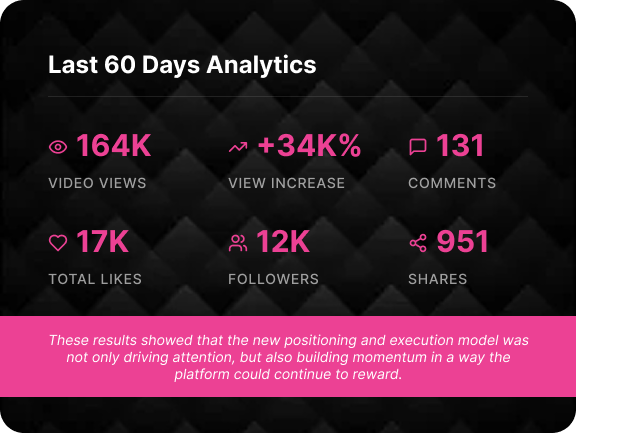
One of the most important outcomes of the strategy was that the TikTok account reached monetization eligibility. According to the case study, this was the first time the brand had operated at monetization level organically.
Beyond platform eligibility, the content also generated organic audiobook sales and created qualified attention for future monetization opportunities. The impact extended beyond vanity metrics and started contributing to real business outcomes.
Why This Worked
Earlier efforts were centered around product creation, direct promotion, and content distribution without proper audience calibration. While those efforts were substantial, they did not align with how modern social platforms actually distribute content and reward engagement.
This strategy worked because it focused on platform mechanics, identity-led discovery, audience psychology, and the engagement signals platforms reward over time. By changing the entry point into the ecosystem, the brand was able to achieve in a short period what years of traditional effort had not delivered.


Key Takeaway
A brand can invest heavily in content, products, and promotion and still fail to grow if the discovery strategy is broken. Sustainable growth happens when the right identity is paired with the right audience and delivered through platform-native execution. When those elements align, engagement deepens, distribution improves, and monetization becomes achievable.
Contact Us
Ready to Grow Your Brand the Right Way?
If you’re serious about building something that lasts, we’re ready to help you do it properly.